

Finishing the Look: What Cabinet Hinge Finials Actually Do
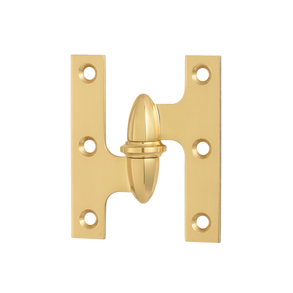
Most people never plan for a finial. They pick a hinge, order it, and move on. Yet the small cap sitting at the top and bottom of a hinge barrel is one of the only hardware details that stays visible for as long as the door exists.
A finial is the decorative tip fitted into the ends of a hinge barrel, and it can be chosen separately from the hinge itself. On a door that gets opened dozens of times a day, that small brass shape is doing more visual work than almost anything else on the frame.
For anyone specifying door hinges or brass cabinet hardware, the finial is worth a second look before the order goes in.
What a Finial Actually Does
A finial sits at the top and bottom of a hinge barrel, capping the pin so it cannot slide up or work its way loose over time. Beyond that mechanical role, it is also the one part of a hinge that sits fully exposed once the door is hung.
Von Morris finials are threaded into the barrel of the hinge rather than pressed in, which keeps the pin from rising during normal use. That detail matters more than it sounds. A finial that loosens over years of opening and closing eventually lets the pin creep, which shows up as a slightly uneven hinge line long before anyone realizes why.
Four Finial Styles, Four Different Moods
Von Morris offers several finial designs, and each one shifts the character of a door without changing anything about how the hinge functions underneath.
● Ball Solid Brass Mortise Hinge Finial — A rounded, understated cap that reads as clean and traditional without pulling attention away from the door itself.
● Acorn Door Hinge Finial — A tapered, slightly pointed shape with a period character, often chosen for homes leaning into a more classic architectural language.
● Steeple Door Hinge Finial — A solid forged brass design with a sharper, more upright profile, hand polished to finish. It carries a formal presence that suits entry doors and front-facing rooms.
● Ribbon and Reed Door Hinge Finial — A highly detailed pattern that is lost wax cast in brass, then hand chased and hand polished by hand. This is the most ornate of the four, built for spaces where the hardware is meant to be noticed.
Each of these finials is interchangeable across all full mortise hinge sizes, which means the finial choice does not lock a project into one hinge size. A homeowner or designer can settle on a finial style first and apply it consistently across doors of different sizes throughout a home, which keeps stocking simple on a multi-door project.
A Closer Look: The Five Knuckle Ball Bearing Hinge
To understand why the finial matters, it helps to look at the hinge it sits on. The Five Knuckle Solid Extruded Brass Hinge in ball bearing, standard weight, is a good example of how Von Morris builds the base hardware that carries these finials.
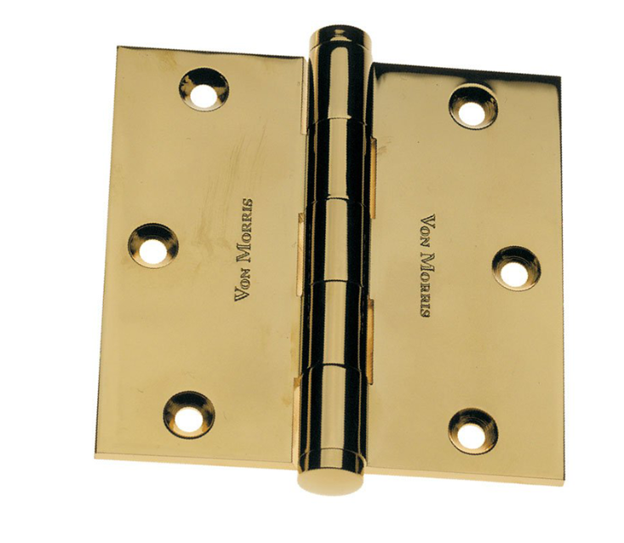
This hinge is made from solid extruded brass and hand polished to finish, with a classic five knuckle profile and a button finial included as standard. It comes in three sizes, 4.0 inches, 4.5 inches, and 5.0 inches, each with its own gauge thickness and screw size, so the hinge can be matched to the exact weight and scale of the door it will carry.
Inside each hinge are two precision machined, anti-friction stainless steel ball bearing assemblies, which keep the door swinging smoothly over years of regular use. The pin itself is machined from high grade 304 stainless steel, a material chosen specifically for its resistance to corrosion and wear. All hinges include template screw hole locations, so they install cleanly on either wood or hollow metal doors and frames, and every hinge is priced and sold as a pair.
The button finial that ships standard on this hinge is a good baseline choice, but because every Von Morris finial threads into the same barrel design, that button can be swapped for a Ball, Acorn, Steeple, or Ribbon and Reed finial without changing anything else about the hinge's performance.
A Closer Look: The Moorestown Olive Knuckle Cabinet Hinge
Cabinet doors carry their own version of this same idea, on a smaller scale. The Moorestown Olive Knuckle Cabinet Hinge, built in solid forged brass with a ball bearing, cabinet weight construction, is a good example of brass cabinet hardware built with the same attention to detail as a full-size door hinge.
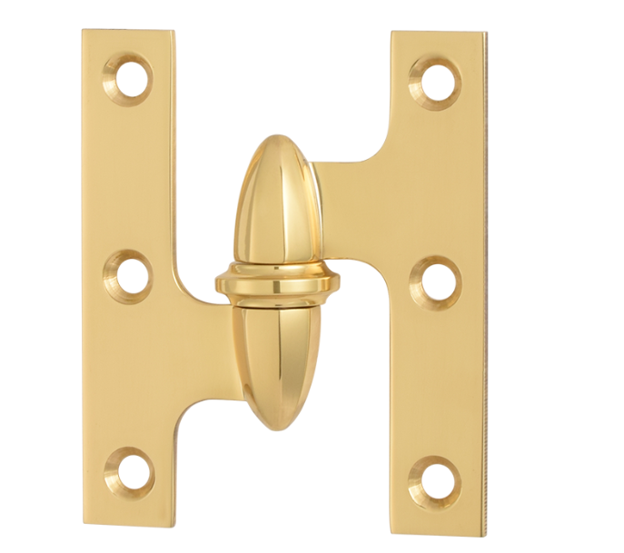
This hinge uses an octagonal Moorestown design, hand polished to finish. The ball bearings inside are machined from 300-series stainless steel with stainless steel balls, and the pin is also 300-series stainless steel, the same material logic used across Von Morris's larger door hinges, scaled down for cabinet weight.
Finial and Hinge Details at a Glance
| Detail | What It Means |
|---|---|
| Ball, Acorn, Steeple, Ribbon and Reed finials | Four distinct design languages, from understated to highly detailed, chosen independently of hinge size |
| Threaded finial construction | Keeps the pin from rising over years of use, protects the hinge line from shifting |
| Interchangeable across full mortise sizes | One finial style can be used consistently across doors of different sizes in the same project |
| Five Knuckle Ball Bearing hinge | Solid extruded brass, hand polished, available in 4.0", 4.5", and 5.0" sizes with matching gauge and screws |
| Moorestown Olive Knuckle Cabinet Hinge | Solid forged brass, cabinet weight, handed, sized specifically for cabinet doors |
| Stainless steel pins and bearings | Used across both door and cabinet hinges for consistent wear resistance |
How to Choose a Finial for a Project
Start with the room, not the catalog. A front entry or formal room can carry a more detailed finial like the Ribbon and Reed or Steeple design, while interior doors in simpler spaces often read better with a Ball or Acorn finial that stays quieter.
Once a finial style is chosen, it can be specified across every full mortise hinge on the project, regardless of hinge size, since the design threads into the same barrel construction throughout the Von Morris line.
When choosing brass cabinet hardware specifically, remember to confirm the hand of the hinge before placing the order, since olive knuckle cabinet hinges like the Moorestown design are handed and cannot be corrected easily after installation.
Frequently Asked Questions
Can a finial be changed without replacing the whole hinge?
Yes. Von Morris finials thread into the hinge barrel and are interchangeable across all full mortise hinge sizes, so a finial style can be updated or matched to a design scheme without swapping out the underlying hinge.
What is the difference between the four finial styles?
The Ball and Acorn finials are simpler, more understated shapes suited to everyday doors. The Steeple finial has a sharper, more formal profile in solid forged brass. The Ribbon and Reed finial is the most detailed, lost wax cast and hand chased for a highly decorative finish.
Does the finial affect how the hinge performs?
No. The finial caps the pin and stops it from rising over time, but the hinge's actual performance, its bearing type, weight class, and knuckle construction functions independently of which finial is fitted.
Why does the hand of a hinge matter for cabinet hinges?
Olive knuckle cabinet hinges, including the Moorestown design, are built as handed hardware. The correct hand needs to be specified at the time of order, since this affects how the hinge swings once installed.
What materials are used inside these hinges?
Both the Five Knuckle door hinge and the Moorestown cabinet hinge use stainless steel pins and ball bearing assemblies, chosen for durability and smooth movement over years of daily use.
Closing Thoughts
A finial is easy to treat as an afterthought, something that comes standard and rarely gets a second decision.
In practice, it is one of the few hardware details that stays in plain sight for the life of the door, and choosing it with intention is a small way to bring more character into a room without touching anything structural.
Browse the full range of Von Morris door hinges and cabinet hinges to see how finial styles, bearing types, and weight classes work together across a project.