

What Is a Knuckle Hinge, and Why Does the Knuckle Count Matter?
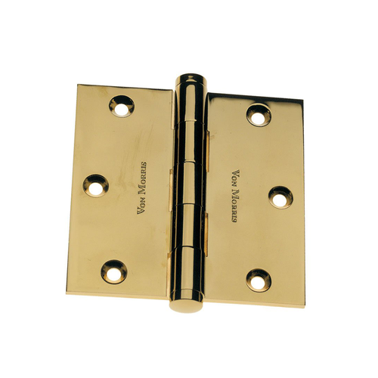
A door swings shut a thousand times before anyone stops to look at what makes it move. The part doing the work is small, cylindrical, and usually out of sight. It is called a knuckle, and it is the core of one of the oldest hardware designs still in daily use today.
A knuckle hinge is a hinge built from two metal leaves joined by interlocking cylindrical sections called knuckles, with a pin running through the center to hold everything together and let the door pivot. That part sounds simple. What is not always obvious is that the number of knuckles, the bearing type inside them, and the weight class all change how a door feels and how long the hinge lasts.
For anyone specifying knuckle hinges for a renovation, a custom build, or a full hardware schedule, those choices are worth understanding before an order goes in.
What a Knuckle Hinge Actually Is?
A knuckle hinge has three working parts: two flat leaves, a series of interlocking knuckles along one edge of each leaf, and a pin that threads through all of them. When the leaves are screwed to a door and its frame, the knuckles line up and the pin becomes the pivot point.
This basic structure has stayed nearly unchanged for centuries because it works. The knuckles carry the weight of the door, the pin keeps everything aligned, and the leaves anchor the whole assembly into the wood or metal frame.
What changes from one hinge to the next is not the basic idea. It is the number of knuckles, the bearing inside them, and the weight the hinge is built to carry.
Why the Number of Knuckles Is Not Just a Style Choice
Von Morris knuckle hinges are available in three knuckle, five knuckle, and two knuckle lift off styles, and the choice between them changes both how the hinge performs and how it looks on the door edge.
1. Five knuckle hinges spread the load across more contact points along a longer barrel. This is the traditional profile most people picture when they think of a door hinge, and it remains the more common choice for standard residential and commercial doors.
2. Three knuckle hinges use a shorter, more compact barrel with fewer visible sections. They carry weight just as reliably within the same bearing and weight class, but present a cleaner, less prominent line on the door edge, which matters on doors where the hinge is meant to be seen as little as possible.
3. A two knuckle lift off hinge takes a different approach entirely. It allows the door to be lifted straight off the pin without removing screws, which makes it a practical choice for doors that need to come off easily for cleaning, repainting, or seasonal swaps like screen doors.
None of these three formats is universally better. The right one depends on the door, the frame, and how much of the hinge should be visible once the door is hung.
Ball Bearing or Plain Bearing: The Other Half of the Decision
Knuckle count is only one part of the specification. Every Von Morris knuckle hinge is also available with either ball bearing or plain bearing construction, and this choice affects how the door feels every time it opens.
Ball bearing hinges use small bearings inside the knuckle to reduce friction between moving parts. This keeps the door swinging smoothly and evenly over years of use, which matters most on doors that open and close often, or doors fitted with a door closer that adds extra resistance.
Plain bearing hinges skip the internal bearing and rely on the knuckle surfaces moving directly against each other. They are a dependable, simpler option for doors with lighter, less frequent use, where the added smoothness of a ball bearing is not doing much extra work.
Neither option is a downgrade. It is a matter of matching the bearing type to how hard the door actually works.
Weight Classes: Standard, Heavy, and Cabinet Weight
Beyond knuckle count and bearing type, Von Morris hinges are built in standard weight, heavy weight, and cabinet weight versions, and this is where a lot of hardware schedules go wrong if it gets skipped.
Standard weight hinges are sized for typical interior and exterior doors. Heavy weight hinges use thicker leaves and stronger knuckles for oversized doors, high traffic openings, or doors carrying extra hardware like closers or panic devices. Cabinet weight hinges, like the Olive Knuckle Cabinet Hinge and the Moorestown Olive Knuckle Cabinet Hinge, are proportioned specifically for cabinet doors rather than full-size entry or interior doors.
Choosing the wrong weight class does not always fail immediately. It shows up later as sag, uneven closing, or a hinge that wears faster than it should.
The Small Details That Finish the Look
Knuckle hinges also carry a finishing detail that is easy to miss: the finial, the decorative cap at the top and bottom of the hinge barrel.
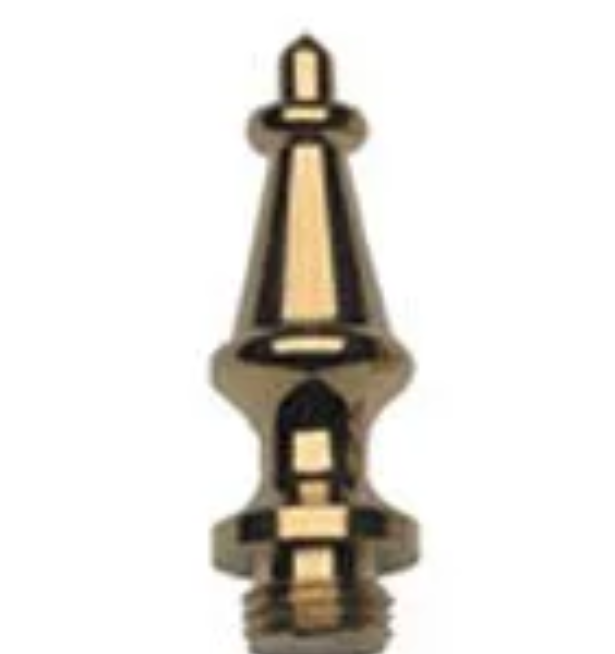
Von Morris offers several finial styles, including the Ribbon and Reed Door Hinge Finial, a highly detailed design that is lost wax cast in brass, then hand chased and hand polished, and the Steeple Door Hinge Finial, a classic pointed profile in solid forged brass, also hand polished to finish. Both are built to be interchangeable across all full mortise hinge sizes, which keeps stocking simple for a project using multiple hinge sizes across a home.
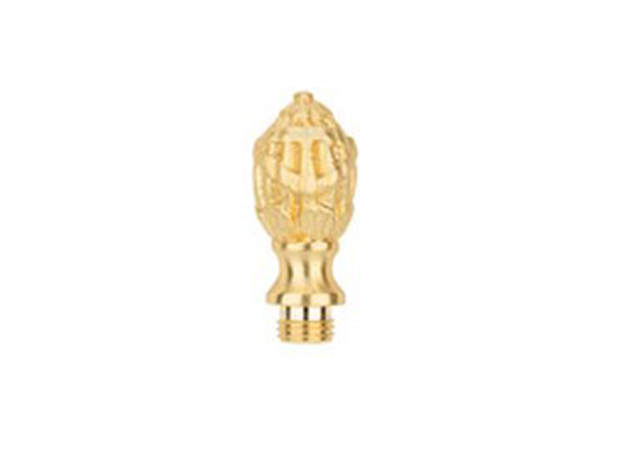
This detail rarely gets a second thought during planning, but it is one of the few parts of a hinge that stays visible once the door is hung. A finial style that matches the rest of a room's hardware language finishes the detail instead of leaving it unresolved.
Knuckle Hinge Specifications at a Glance
| Specification | What It Means for the Door |
|---|---|
| Five knuckle | Traditional profile, load spread across more contact points, common on standard doors |
| Three knuckle | Compact barrel, cleaner line on the door edge, same reliable performance within its weight class |
| Two knuckle lift off | Doors can be lifted off the pin without removing screws, useful for doors removed often |
| Ball bearing | Reduces friction for smoother movement on frequently used or closer-fitted doors |
| Plain bearing | Simpler construction, dependable for lighter, less frequent use |
| Standard weight | Sized for typical interior and exterior doors |
| Heavy weight | Thicker leaves and knuckles for oversized or high traffic doors |
| Cabinet weight | Proportioned for cabinet doors rather than full-size openings |
How to Choose the Right Knuckle Hinge for Your Project
Start with the door itself. Its size, weight, and how often it opens will point toward a weight class before anything else gets decided. From there, ball bearing hinges suit high frequency doors, while plain bearing hinges are enough for lighter use. Knuckle count then becomes a question of how much of the hinge should show on the finished door edge.
For anyone building a full hardware schedule, working through knuckle hinges in this order (weight, bearing, then knuckle count) keeps the decision grounded in how the door will actually be used, not just how the hinge looks in a catalog photo.
Frequently Asked Questions
What is the difference between a three knuckle and a five knuckle hinge?
A five knuckle hinge has a longer barrel with more contact points, giving it the traditional hinge profile most people recognize. A three knuckle hinge uses a shorter barrel with fewer visible sections, offering a cleaner line while performing just as reliably within the same bearing and weight class.
Do knuckle hinges need to match on every door in a home?
Matching is common for visual consistency, but it is not required. Many projects use heavier hinges on high traffic or oversized doors and lighter ones elsewhere, as long as the finish and design language stay consistent.
Should I choose ball bearing or plain bearing hinges?
Ball bearing hinges are a better fit for doors that open often or carry a door closer, since the internal bearing reduces friction over time. Plain bearing hinges work well for doors with lighter, less frequent use.
What is a lift off hinge used for?
A lift off hinge lets the door be removed straight from the pin without unscrewing the hinge itself. This is useful for doors that come off periodically, such as screen doors or doors that need frequent refinishing.
Can hinge finials be changed after installation?
Von Morris finials, including the Ribbon and Reed, and Steeple designs, are built to be interchangeable across all full mortise hinge sizes, which makes it possible to update the finial style without replacing the hinge itself.
Closing Thoughts
A door hinge rarely gets credit for how well a door performs, yet knuckle hinges carry that responsibility every single day.
The knuckle count sets the visible profile, the bearing type decides how smoothly the door moves, and the weight class determines how long the hinge holds up under real use. Getting these three decisions right does more than protect a door. It protects the quiet, consistent experience of a home that works the way it should.
Explore the full range of Von Morris door hinges to find the knuckle count, bearing type, and finish that fit your project.