

How to Specify Olive Knuckle Hinges
Door hardware often receives less attention than it should, even though it supports daily movement inside a building. A hinge may look like a small piece of metal, yet it carries the full weight of the door and allows smooth motion through many years of use. When someone chooses hardware with care, the door works quietly and without trouble.
Olive-style knuckles are known for their simple shape and steady performance. When specifying knuckle hinges, it helps to understand materials, sizes, and finishing work. A careful choice leads to long service life and a door that feels balanced each time it opens.
What Are Olive Knuckle Hinges
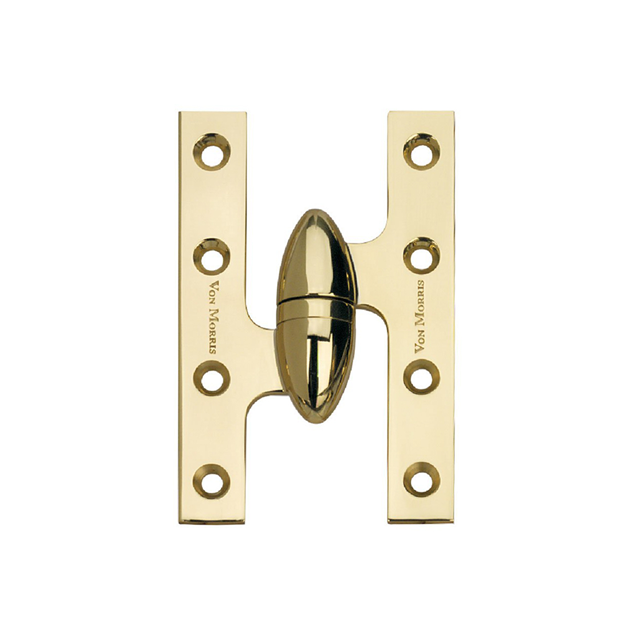
Olive knuckle hinges are door hinges where the barrel sections form a soft, rounded shape that looks close to an olive. The hinge pin passes through these rounded sections, allowing the leaves to move around the center axis.
In many traditional doors, this form appears both practical and pleasing to the eye. The design is not complex, yet it carries weight well and works smoothly.
Some common points that define this hinge style include:
● Rounded knuckle sections that rotate around a central pin
● Balanced movement when doors open and close
● A structure that spreads the weight evenly along the hinge length
● Compatibility with wood or metal doors in homes and offices
When people discuss knuckle hinges, they often refer to these rotating sections. The number of knuckles and their spacing influence how the hinge carries the load.
Basic Parts of a Door Hinge
Understanding a hinge becomes easier once the main components are clear. Though the design appears simple, each part performs a clear task.
Main parts include:
● Leaf plates – Flat sections that attach to the door and frame
● Knuckle barrel – The rounded section where movement occurs
● Hinge pin – The central rod that holds the knuckles together
● Finial – A decorative end on the hinge pin
● Screw holes – Points where the hinge is fixed to the surface
When these parts are shaped with care and fitted well, the hinge operates with little friction. A door then moves quietly and stays stable through daily use.
Material and Finish Standards
Material choice affects both durability and appearance. Hinges experience pressure every day, so the base metal must resist wear and bending.
Many quality hinges use brass, bronze, or stainless steel. Each metal behaves slightly differently, yet all provide strong support when produced with the correct alloy composition.
At Von Morris, the production process follows strict material selection and machining standards. Their hinges begin with premium raw metals chosen for correct alloy balance and accurate dimensions.
Important material points include:
● Brass and bronze were selected for strength and appearance
● Stainless steel for environments where moisture may be present
● Accurate machining to maintain tight tolerances
● Careful hand finishing for smooth surfaces
After polishing, a protective lacquer coating helps keep the metal surface stable during long periods of use.
Measuring Door Requirements Before Specification
Before ordering hinges, door measurements should be reviewed. Small measurement errors may lead to misalignment once the hinge is installed.
Installers usually consider several factors.
Key measurements include:
● Door height and width
● Total door weight
● Thickness of the door panel
● Frame material and strength
● Required hinge spacing
These points guide the final hinge size and number of hinges used. Heavier doors normally require larger hinges or additional hinge positions.
Selecting Knuckle Hinges for Long-Term Use
While specifying knuckle hinges, the number of knuckles and the bearing type deserve attention. More knuckles often distribute the load more evenly along the hinge barrel.
Ball bearing hinges also reduce friction between rotating sections. This detail becomes important on doors that open many times each day.
Some practical points to review:
● Use ball bearing hinges for heavy or frequently used doors
● Check gauge thickness for strength
● Confirm the screw size matches the door frame material
● Choose matching decorative finials if appearance matters
A hinge that matches the door weight and frequency of use usually performs better over time. Many installers prefer hinges that allow smooth rotation without excessive noise.
Featured Product: Five Knuckle - Solid Extruded Brass Hinge
| Length | Width | Gauge | Screw Size |
|---|---|---|---|
| 4.0" | 4.0" | 0.130" | 12 × 1.25" |
| 4.5" | 4.5" | 0.134" | 12 × 1.25" |
| 5.0" | 5.0" | 0.146" | 12 × 1.25" |
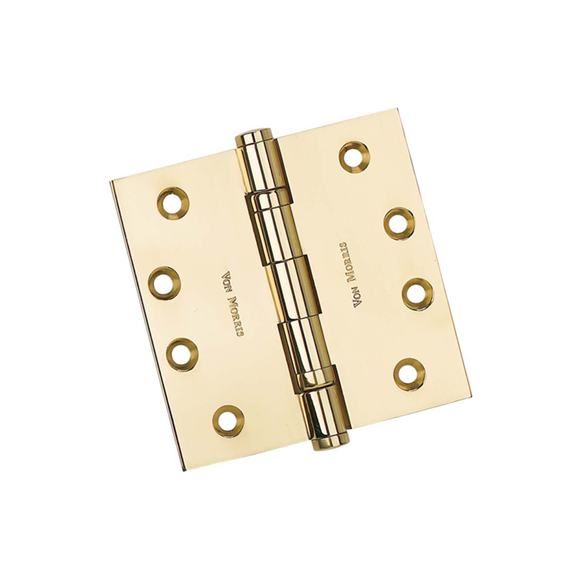
This hinge model from Von Morris reflects a traditional design that balances durability and visual detail. The hinge body is made from solid extruded brass, shaped carefully to maintain consistent thickness and structure.
The hinge includes a ball bearing system, which supports smooth movement during repeated opening and closing.
Product characteristics include:
● Classic design with button finial
● Solid extruded brass construction
● Hand-polished surface finish
● Ball bearing support system
● Standard weight hinge body
● Optional decorative solid brass finials
These hinges pass through several stages of finishing where craftsmen polish each surface until a bright metal appearance forms. After polishing, a protective lacquer coating helps maintain the finish.
Hinge Size Specifications
These dimensions help installers match hinge size with door requirements.
Installation Notes for Accurate Performance
Even a well-made hinge must be installed carefully. Alignment between the door and frame plays a large role in hinge life.
Some installers follow a simple routine during installation.
● Check the hinge recess depth in the door and frame
● Confirm that hinge leaves sit flat without gaps
● Tighten screws evenly without stripping threads
● Test the door swing before final adjustment
These small steps help the hinge rotate freely without stress on the pin or knuckles.
Care and Maintenance
Door hinges usually require little maintenance, yet small checks once in a while can keep the movement smooth.
Maintenance may include:
● Cleaning dust from hinge surfaces
● Checking screw tightness after long periods of use
● Light lubrication if movement feels stiff
● Inspecting hinge alignment when doors shift slightly
Because high-quality brass hinges resist corrosion, they normally remain stable for many years when used indoors.
Conclusion
Specifying door hardware may appear like a technical task, but it becomes straightforward when each detail is understood step by step. The hinge must match the door weight, size, and expected use. Material quality also matters because hinges experience constant motion during daily life.
When selecting knuckle hinges, attention to size, gauge, and bearing type leads to steady performance. Products from Von Morris show how careful metal selection, precise machining, and patient hand finishing come together in a reliable hinge. When these elements align, a door opens quietly, closes with balance, and continues working well for many years.